
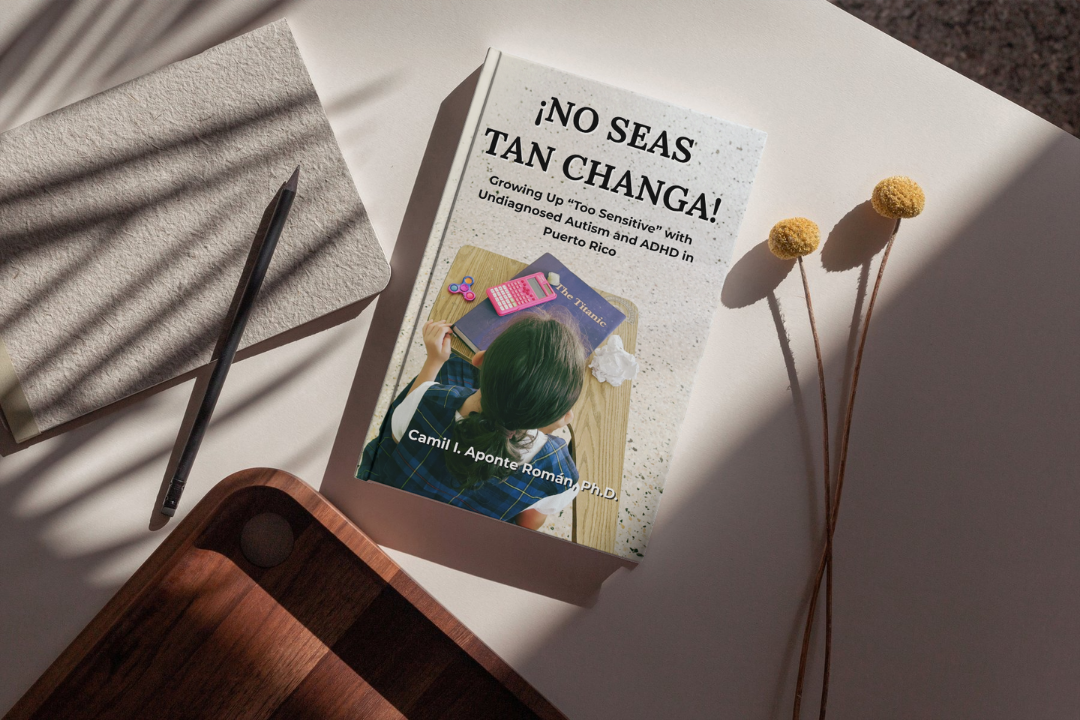
¡No Seas Tan Changa!
Growing Up “Too Sensitive” with Undiagnosed Autism and ADHD in Puerto Rico
Available now at:*



Changa (noun, Puerto Rico): A cultural idiom often used to label a child perceived as "difficult," "fussy," or "too sensitive." Historically used to silence; reclaimed to empower.
I spent more than three decades trying to understand why I felt "too much" for the world around me. I was the child who couldn't handle the sensory noise, the itchy lace on my collars, or the unwritten social rules that others seemed to navigate with ease. As a PhD mathematician, I was trained to look for logic. But I couldn’t find the logic in my own life until I found the missing variable: AuDHD.
This memoir is the journey of how I moved from cultural shame to the Final Proof of self-acceptance. It is the manual I wish my parents, my teachers, and my younger self had always had.
To guide others navigating these same systems, I have intentionally integrated the research into the narrative. Throughout the chapters, you will find:
AuDHD Side-Notes: Interludes that provide research-backed explanations for the "unsolvable" behaviors we’ve been shamed for—from the physics of sensory meltdowns to the mechanics of executive dysfunction.
A Shift in Perspective: Stories that reframe "difficult" behaviors as cognitive peaks, helping families and educators see the brilliant, spiky profile of the neurodivergent mind.
A New Equation for Life: A journey that moves past the pressure of "normalcy" to reveal frameworks for building a life—and a family—rooted in sustainability and joy.
Join my journey! The manuscript is coming in April! Join the list to receive behind-the-scenes updates, "pebbles" of wisdom from the chapters, and be the first to know when the pre-order opens.
About the Author: Camil I. Aponte Román is an educator, mathematician, parent, and Neuroinclusive Coach. Based in Puerto Rico, they use their analytical lens and lived experience to help others build neuroinclusive maps that prioritize sustainability over "normalcy."
*Affiliate Link